- +92-300-8999999
- [email protected]
- Mon - Sat: 9:00 - 18:30

Home » Top Basmati Rice in World: A Buyer’s Guide for Global Buyers
Sourcing the top basmati rice in world gets risky when grades, moisture levels, and grain length aren’t consistent from shipment to shipment. As a result, a single failed spec check can delay customs clearance or damage a buyer’s reputation with their own customers. Because of this, this guide breaks down what actually sets premium basmati apart from the rest, backed by verified export data, so importers can compare grades with confidence before placing an order.
Two countries dominate global basmati supply, and the data tells a clear story.
For instance, India’s overall rice exports fell 7.5% to USD 11.53 billion in FY2025-26, down from USD 12.5 billion the previous year, largely due to shipping disruptions tied to the conflict in the Middle East. Even so, basmati held up better than the rest of the category: Indian basmati volumes hit an all-time record of 6.4 million tonnes in calendar year 2025. Iran, Saudi Arabia, the UAE, and Oman remain the top destinations, with Iran alone the single largest buyer.
Meanwhile, Pakistan is the world’s smaller but historically faster-growing exporter. According to Pakistan Bureau of Statistics data reported in June 2026, Pakistan exported 717,231 metric tons of basmati rice worth $753.4 million in the first 11 months of FY2025-26, a slight pullback from 761,127 metric tons worth $781.9 million in the same period the year before. In fact, both countries’ basmati volumes have held steady, whereas non-basmati rice has absorbed most of the price pressure from oversupply and shipping disruptions.
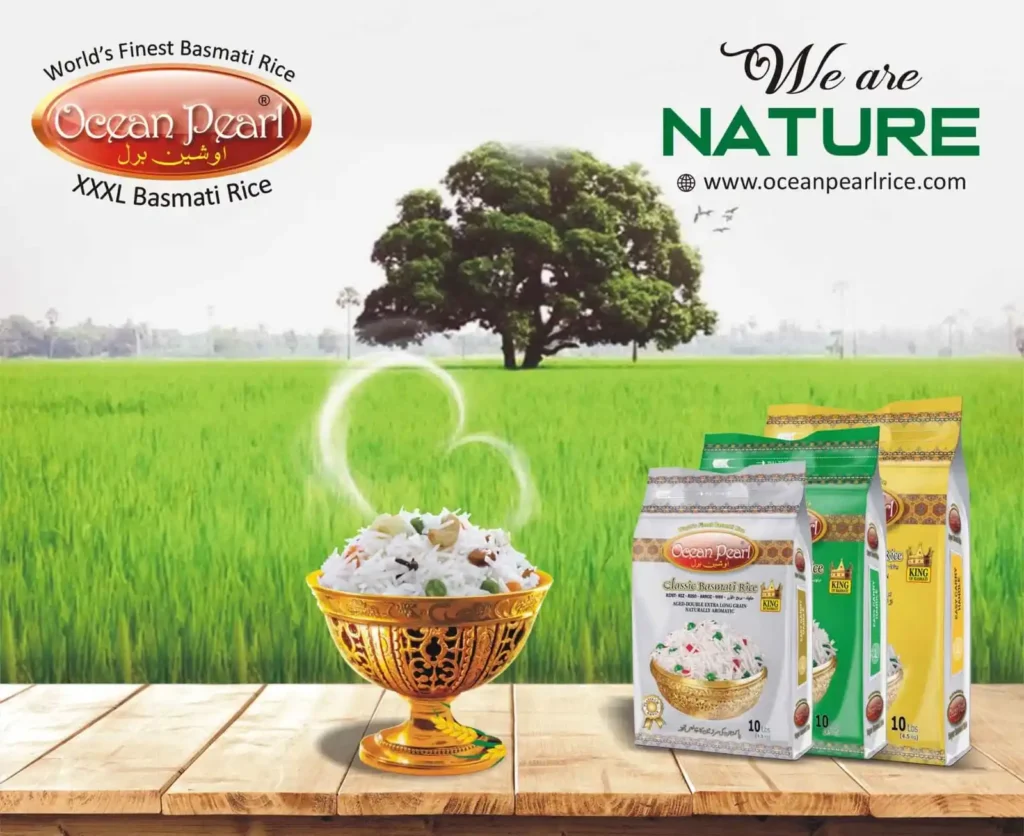
Both countries anchor their claims in a legal definition, not marketing language. Per APEDA’s official export requirements, basmati is a long-grain aromatic rice grown specifically in the Himalayan foothills, with extra-long slender grains that elongate to at least twice their original size and a distinct soft, fluffy texture when cooked. That’s the actual bar the top basmati rice in the world has to clear, not just a taste claim.
Three measurable factors separate premium basmati from standard long-grain rice, and together they explain why so few exporters can consistently claim the title.
Real basmati roughly doubles in length after cooking while staying separate and non-sticky. This is testable, not subjective.
The signature scent comes from 2-acetyl-1-pyrroline, a naturally occurring compound. Because of this, aging the grain for 12+ months typically intensifies the aroma rather than diluting it.
Raw (white) basmati suits gourmet and retail buyers who want authentic flavor. Parboiled (sella) basmati, on the other hand, holds up better in bulk shipping and high-volume foodservice, which is why Middle Eastern and African importers often prefer it.
Given those three factors, here’s how Ocean Pearl’s own grades stack up against each standard:
| Grade | Processing | Best For | Learn More |
|---|---|---|---|
| Classic Basmati | Aged, raw white | Fine dining, retail, gourmet households | Classic Basmati Rice |
| Golden Sella | Parboiled | Bulk shipping, foodservice, biryani/pilaf | Golden Sella Basmati Rice |
| Super Basmati | Raw, extra-long grain | Everyday cooking, mid-volume importers | Super Basmati Rice |
| Brown Basmati | Whole grain, minimally milled | Health-focused retail, nutrition-led markets | Brown Basmati Rice |
Rather than list every port individually here, which reads as keyword stuffing to both search engines and AI crawlers, each region below gets a short, specific breakdown instead. The full list of ports and countries belongs on your export markets page and distributor page, linked throughout this section.
See our complete list of export destinations and ports for the full breakdown by country.
Ocean Pearl operates under Waqar Rice Mills, and the group holds a broad portfolio of certifications spanning food safety, quality management, and religious dietary compliance. According to Waqar Rice Mills’ own disclosures, the group is certified under ISO 22000:2018 for food safety management and ISO 9001:2015 for quality management, alongside HACCP (Hazard Analysis Critical Control Points) and GMP (Good Manufacturing Practices) certification covering its milling and processing operations.
For markets with religious dietary requirements, the group holds Halal and Kosher certification, and it maintains USFDA compliance alongside FSSAI standards for buyers who require them. Because Pakistan’s REAP (Rice Exporters Association of Pakistan) membership requires ongoing compliance review, it serves as an additional layer of oversight beyond the certifications themselves. An independent listing from DQS, a third-party global certification body, separately confirms an active certificate covering the group’s rice cleaning, grading, polishing, and packing operations, which corroborates the certifications the group lists on its own site rather than leaving them as a one-sided claim.
For shipments requiring specific import-country inspections, Waqar Rice Mills’ export operations comply with third-party inspection standards, including Cotecna, BVQI, Eurofins, and SGS, as well as EU and USDA organic certification for its pesticide-free product line.
For further detail, see our milling and processing standards, and learn why we’re recognized as Pakistans top rice exporter. If you want to buy rice online, call the top basmati rice in world 2026, 2027 at +92-(300) 899-9999.
What makes basmati rice different from other long-grain rice?
Basmati grains elongate to roughly twice their length when cooked and carry a natural aroma compound, 2-acetyl-1-pyrroline, that other long-grain varieties lack.
Is Pakistani basmati different from Indian basmati?
Both are grown in the Himalayan foothill belt and meet the same botanical definition. However, differences come down to specific growing region, aging process, and individual exporter quality control rather than country alone.
Which basmati grade is best for biryani?
Parboiled grades like Golden Sella hold their shape better under long cooking times and high spice loads. As a result, bulk foodservice buyers often choose it over raw basmati for biryani.
How long is basmati rice aged before export?
Premium basmati is typically aged 12 months or longer. Because of this, moisture content drops and aroma intensifies without breaking down the grain structure.
Does Ocean Pearl export the top basmati rice in world to Europe and the Gulf?
Yes. See our export markets page for current shipping destinations, or contact our export team directly.
Sign up and stay with Ocean Pearl Rice
Our mission is to produce high-quality rice products that are enjoyed by customers around the world. We strive to use sustainable agricultural practices and to be a responsible member of the local community.
© 2025 Ocean Pearl Rice | Biggest Rice Mill in Pakistan | Mill Directions to Largest Rice Exporter in Pakistan
WhatsApp us